How to Stay Informed
Grand River Dam Authority (GRDA) manages water levels at Grand Lake through Pensacola Dam. When heavy rains cause lake levels to rise, GRDA may open floodgates to release water downstream.
Official GRDA Notifications
GRDA provides several ways to get real-time information:
- GRDA Website: grda.com — Official lake level data and alerts
- GRDA Hotline: Call for recorded updates on lake conditions
- Social Media: Follow GRDA on Facebook and Twitter for announcements
- Email Alerts: Sign up for notifications on the GRDA website
Understanding Lake Levels
Grand Lake's water level follows a seasonal pattern called the "Rule Curve," established by FERC (Federal Energy Regulatory Commission). Understanding this schedule helps you plan your time on the lake.
Grand Lake Seasonal Water Levels
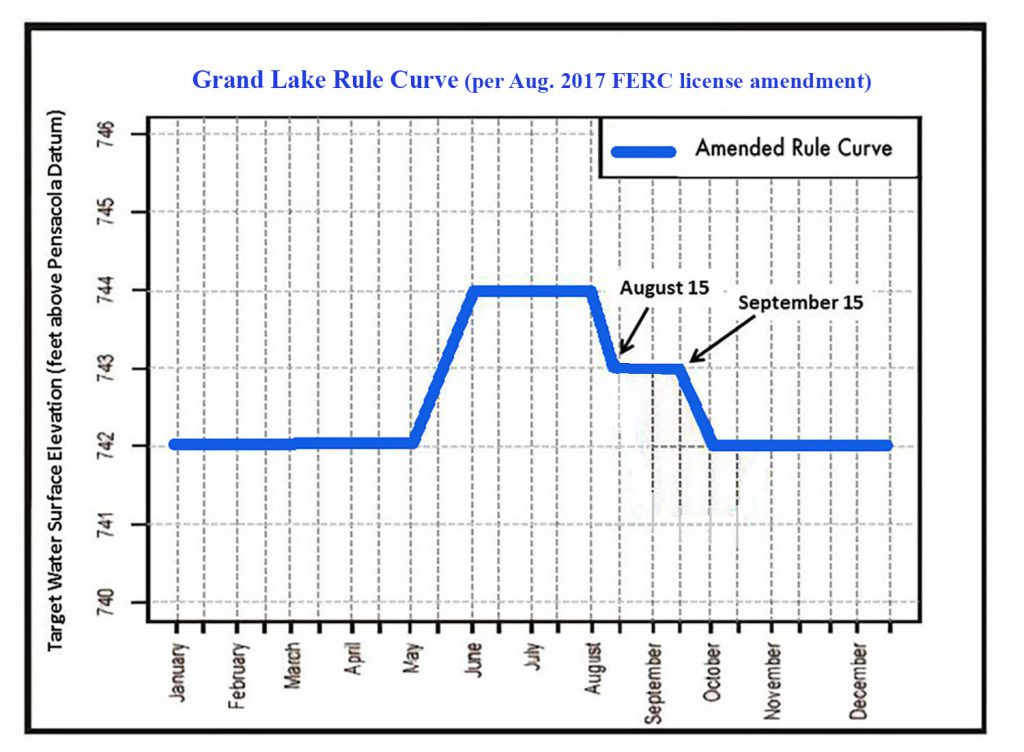
Source: GRDA (per Aug. 2017 FERC license amendment)
- Winter Pool (Sept 15 - May 1): 742 feet — Lower level for flood control capacity
- Rising (May): Lake rises from 742 to 744 feet
- Summer Pool (June 1 - Aug 15): 744 feet — Peak recreational level
- Drawdown (Aug 15 - Sept 15): Lake drops from 744 to 742 feet
When heavy rainfall causes the lake to rise above the target level for that time of year, GRDA may open floodgates to release water downstream through Pensacola Dam.
What Floodgate Releases Mean for You
- Boaters: Strong currents near the dam. Avoid the spillway area when gates are open.
- Anglers: Paddlefish snagging below the dam can be excellent when water is flowing.
- Dock Owners: Fluctuating water levels may affect your dock. Check tie-downs.
- Downstream: Be aware of rising water levels on the Neosho River below the dam.
Pensacola Dam
Built in the late 1930s, Pensacola Dam is the longest multiple-arch dam in the world. It spans over a mile across the Grand (Neosho) River and created Grand Lake O' The Cherokees.
Learn More About Pensacola Dam →