Cold-weather fishing
Cold temperatures don’t end the opportunity. Fishing conditions and success vary with weather, water temperature, river flow and fish movement. Ask a guide about current conditions and dress for a long day outdoors.
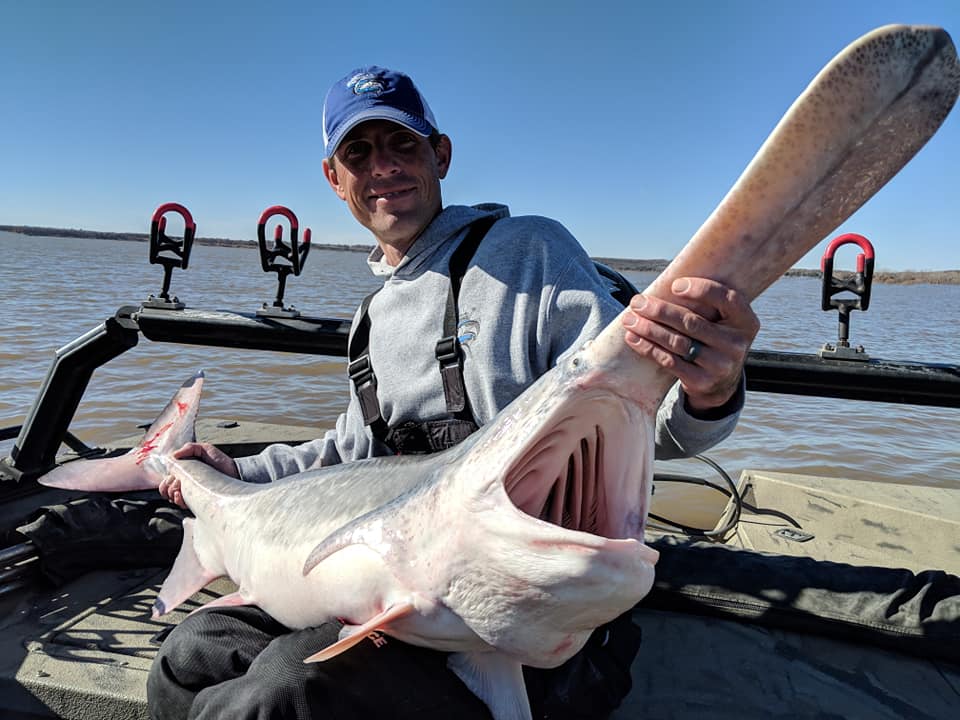
A practical guide to cold-weather fishing, spring migration, public access, local guide options and Oklahoma's paddlefish rules.
Regulations reviewed October 2026 against current Oklahoma Department of Wildlife Conservation guidance.
Paddlefish — often called spoonbill — are native to the Grand and Neosho River system. Fishing for them is different from casting bait for most game fish: snagging uses a single or treble hook, and Oklahoma sets specific rules for hooks, rods, harvest and reporting.
For a first trip, plan around cold-weather conditions or the spring migration, decide whether you’ll fish from shore or by boat, and check the rules before choosing a launch or meeting point. A guide can help with equipment and local conditions, but each angler remains responsible for the required license or permit.
This guide summarizes the key trip-planning details. Use the official links below to confirm current regulations and access before you go.
Paddlefish are successfully snagged at Grand Lake throughout the cold-weather months, as well as during the spring migration. Spring brings a well-known movement through the Grand/Neosho system toward spawning areas, but it isn’t the only time anglers fish for them.
Cold temperatures don’t end the opportunity. Fishing conditions and success vary with weather, water temperature, river flow and fish movement. Ask a guide about current conditions and dress for a long day outdoors.
Spring migration is another well-known peak, but it is not a fixed statewide opening date. ODWC allows year-round catch-and-release paddlefish fishing by rod and reel, trotlines and throwlines, subject to current rules. Harvest limits, permit requirements, snagging hours, methods and water-specific restrictions still apply.
The Grand/Neosho River system is the focus for paddlefish anglers in this part of Oklahoma. Twin Bridges State Park sits near the confluence of the Spring and Neosho rivers on Highway 60 near Wyandotte and is one locally referenced access area.
Spring River closure: All paddlefish angling methods are prohibited on the Spring River from the State Highway 60 bridge upstream to the Kansas line. Being near Twin Bridges does not mean every nearby stretch is open to paddlefish fishing.
ODWC’s Grand Lake information lists public ramp areas including Twin Bridges, Disney, Bernice, Honey Creek, Duck Creek, Shangri-La, Connors Bridge and Miami City View Park. Use the official page to check access details and maps; do not assume a ramp is open or that a particular bank or water area is available.
Special restrictions apply near Pensacola Dam. On the Grand (Neosho) River below the dam, snagging is prohibited below the turbine outlets through State Park Bridge and below the spillway outlets to the highline crossing. The next half-mile below the highline crossing is closed to snagging while spillway gates are closed. Review the current area regulations before selecting a location.
ODWC Grand Lake access and area information · ODWC Grand (Neosho) River special regulations

A local guide can help you plan around conditions and understand what equipment is provided. Before booking, ask about trip length, included gear, meeting location, accessibility, and whether catch cleaning is available. Confirm licensing and permit requirements yourself: hiring a guide does not replace them.


Grand Lake spoonbill charters aboard a 2026 SeaArk ProGuide with an enclosure for cold-weather trips. The existing listing offers four-hour trips with rods and tackle provided. Call to confirm available dates, meeting point, accessibility and catch-cleaning arrangements.
Afton-based guide service offering spoonbill trips and summer bowfishing. Contact Cody to discuss current availability, trip duration, included equipment and meeting location.
Fishing guide service covering Grand Lake and other Northeast Oklahoma lakes, with trips for white bass, hybrid/stripers, catfish and spoonbill paddlefish. Confirm current services and trip details directly.
Plan catch cleaning ahead: ODWC says the Paddlefish Research Center is closed indefinitely. Its former fish-cleaning and caviar service is not operating. Ask your guide about current cleaning options rather than planning a stop at the center.
Read ODWC paddlefish regulations · ODWC paddlefish permits and E-Check information · Get the free paddlefish permit
Ask your guide what they provide. If fishing on your own, make sure your equipment and plan meet current ODWC rules before you leave.
Check the fishing forecast and access notes before driving, then choose a place to stay near your launch or meeting point. Conditions and travel distances vary around this large lake, so confirm directions and access with the relevant park, guide or land manager.
Explore the Grand Lake fishing guide · Find Grand Lake lodging · Get the weekly Grand Lake newsletter

Events, dining, lake news & insider tips — every week.